Featured Projects

Imperdibles (Unmissables / Safety Pins)

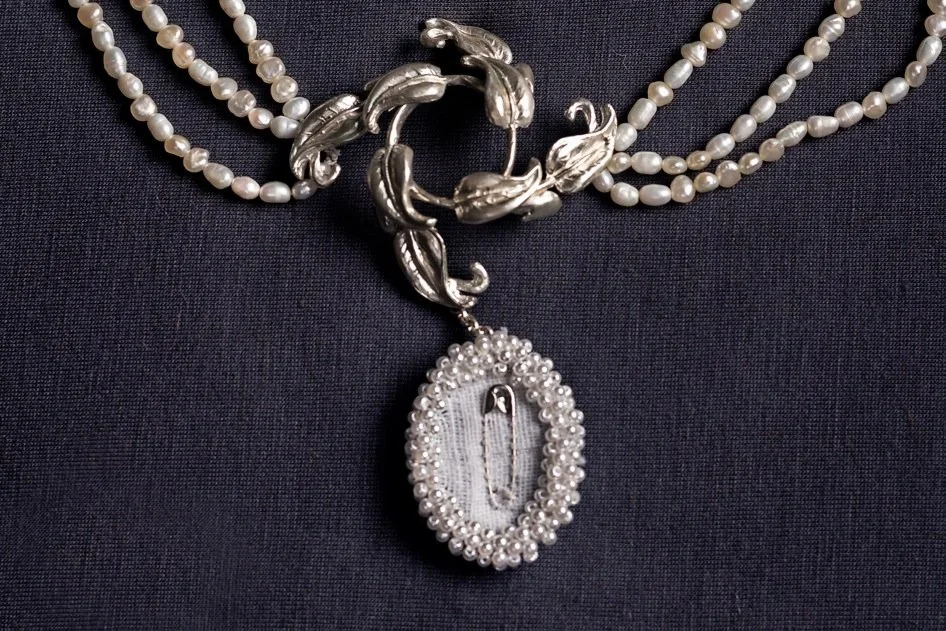
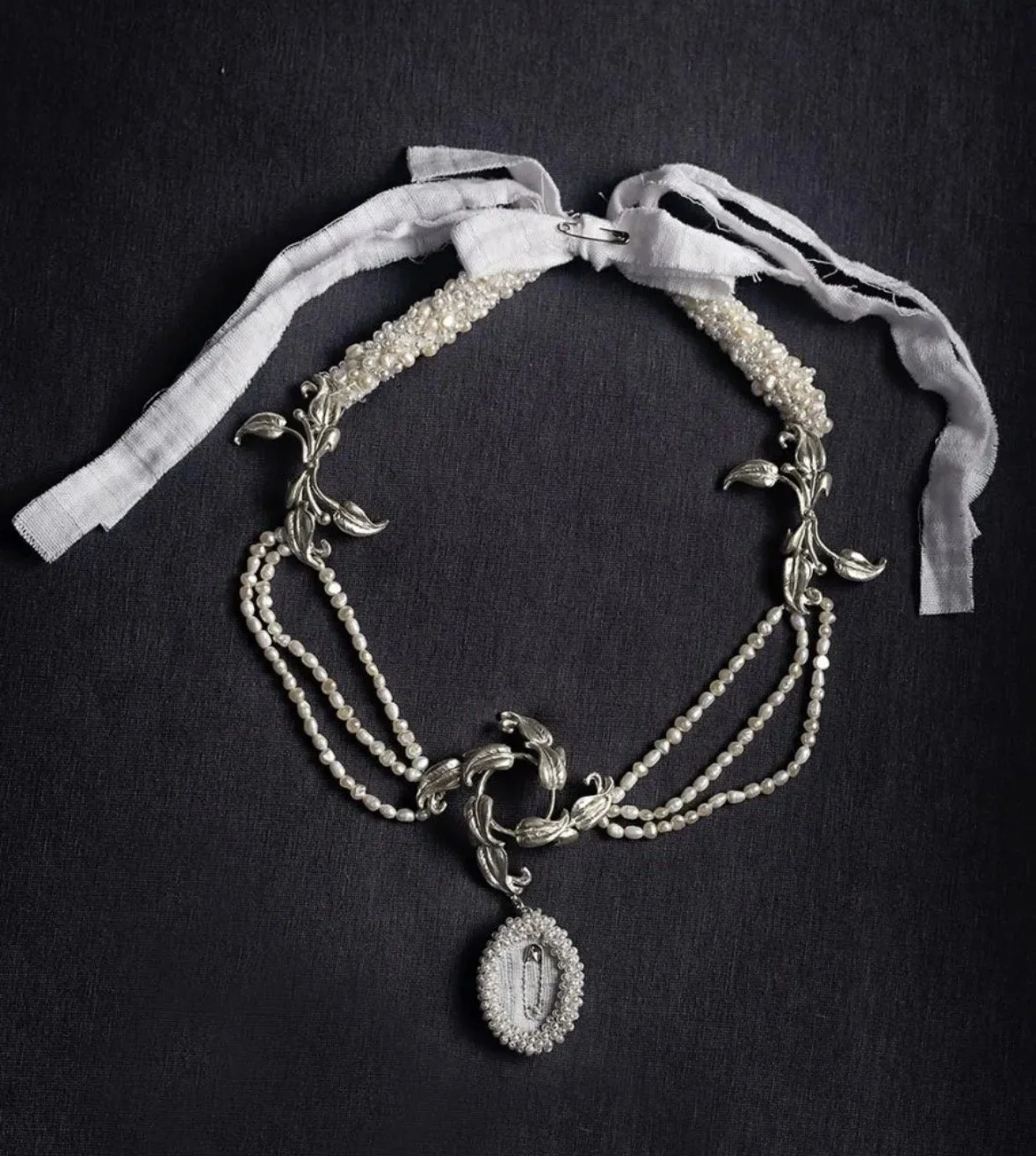
When I think of the Mothers of the Plaza de Mayo, the first image that comes to mind is the honeycomb fabric of their children’s diapers; this image acquired a more powerful meaning when I became a mother myself. Based on this, the other image I immediately associate with them is the safety pin—the “imperdible”—because our loved ones are just that: imperdibles (unmissable and irreplaceable).

My way of honoring these mothers and grandmothers is by showcasing the images I associate with that chapter of history within a single piece.

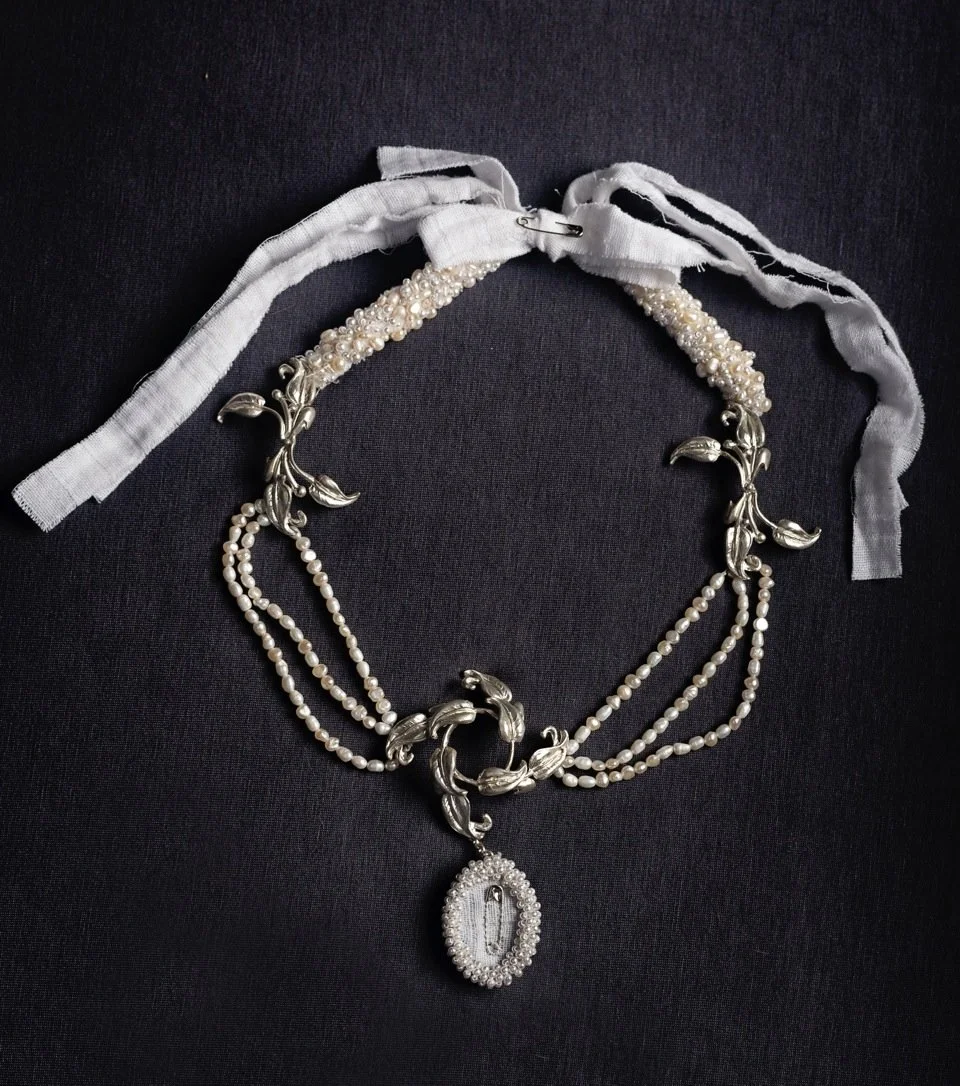
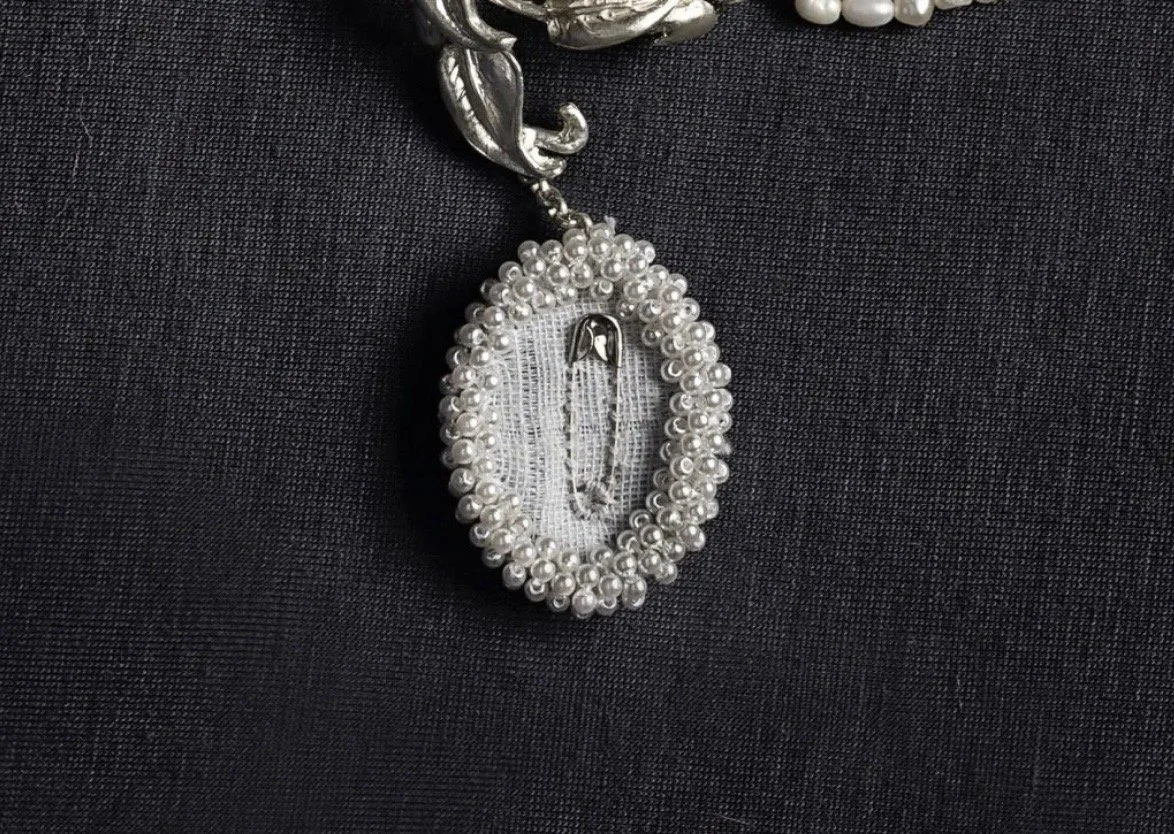
The front of the piece reflects an Argentina tied to a reinterpreted and deeply rooted European image—one full of tradition and luxury. Based on a design detail from the gates of the National Museum of Arms, I modeled the central and lateral silver pieces in wax. This was an attempt to depict a militarized, ordered, and structured Argentina. On this front side, within a cameo surrounded by pearls, the honeycomb fabric and a camouflaged safety pin emerge, held by white stitches joined to the cloth. Although it hangs centered as a focal point, it remains partially hidden.

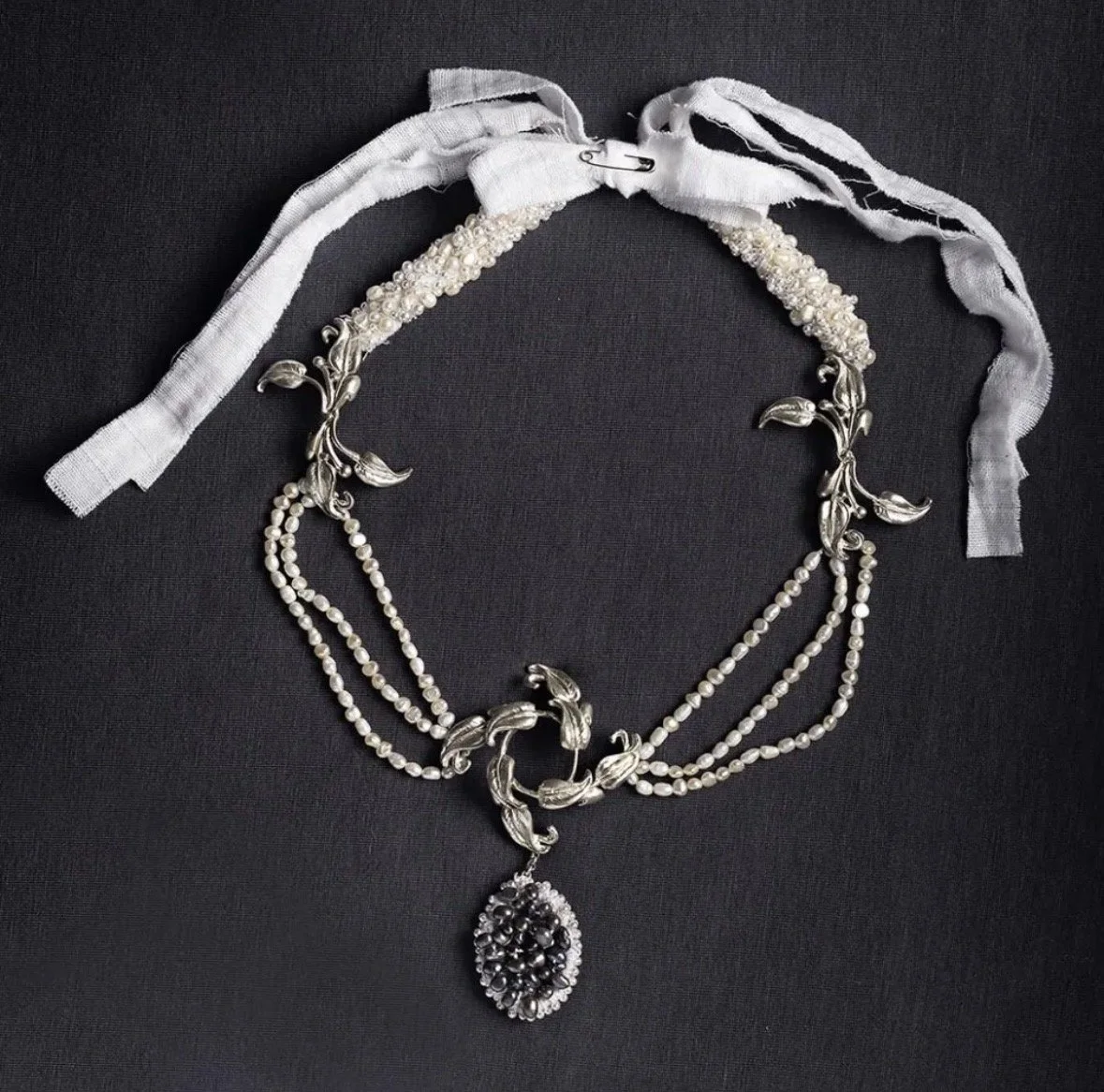
The back of the piece is covered in black pearls, bringing to the surface the darkness that lay beneath that luxury and structure. The central piece is empty and hollow, representing the void left in homes, in society, and in history.

From the midpoint to the back of the neck, the piece is constructed with braided ribbons of cotton honeycomb fabric covered in pearls. As it approaches the clasp, the fabric is revealed as it is, uncovering the reality of the exposed muslin. This represents how the mothers united and revealed what—despite being in plain sight—was avoided by others out of comfort or fear. The piece fastens with another safety pin because, just like with cloth diapers, it was always secured with two.

Just for historical reference

The Mothers of Plaza de Mayo (Spanish: Madres de Plaza de Mayo) is an Argentine human rights association formed in response to abuses by the National Reorganization Process, the military dictatorship by Jorge Rafael Videla. Initially the association worked to find the desaparecidos, people who had disappeared without arrests, trials or judicial process; most were believed dead. Their mothers and supporters investigated to determine the culprits of what were considered crimes against humanity in order to bring them to trial and sentencing.

The Mothers began demonstrating in the Plaza de Mayo, the public square located in front of the Casa Rosada presidential palace, in the city of Buenos Aires, on 30 April 1977. They petitioned to have their disappeared children, mostly young adults, returned alive. The women demonstrated in the square on a daily basis and held signs with their pleas, followed by carrying photos of their missing children, and wearing white scarves with their names. By declaring a state of emergency, police expelled them from the public square.

In September 1977, in order to make a larger opportunity to share their stories with other Argentinians, the mothers decided to join the annual pilgrimage to Our Lady of Luján, located 30 miles (48 km) outside Buenos Aires. To stand out among the crowds, the mothers wore children's nappies (diapers) as headscarves. Following the pilgrimage, the mothers decided to continue wearing these headscarves during their meetings and weekly demonstrations at the Plaza. On them, they embroidered the names of their children and wrote their main demand: "Aparición con Vida" (Proof of life).

molton brown

A bold reimagining of a timeless brand.